Loading...
Serving West Springfield, VA and surrounding areas. (571) 559-8187
Building a deck, porch, or addition on footings that were not dug deep enough is a problem that shows up in year two or three - not year one. We dig to frost depth, handle Fairfax County permits and inspections, and size every footing for Northern Virginia's clay soil.
Concrete footings in West Springfield, VA are the underground bases that hold up decks, porches, additions, and outbuildings - they are poured below the frost line, typically around 24 inches deep in this area, so freezing ground cannot push them upward, and most residential footing projects take one to two days for the physical work.
Every structure you build above the ground is only as stable as what is below it. In West Springfield, the clay soil that runs throughout Fairfax County expands when wet and contracts when dry, putting ongoing stress on footings that were not sized correctly for those conditions. If you are planning a deck or addition and also need the full structural base addressed, we often coordinate footing work alongside our foundation installation service when the project scope calls for both, so the permit and inspection process covers everything at once.
If your deck posts are no longer perfectly vertical, or a gap is opening between the deck ledger and your house wall, the footings below may have shifted. In West Springfield, this often happens after a series of hard winters where the freeze-thaw cycle has worked on shallow or undersized footings. A leaning post is not a cosmetic issue - it means the structure is no longer carrying weight the way it was designed to.
Cracks that run horizontally near the bottom of a porch wall or at the base of concrete steps are often a sign that the footing below has moved. Northern Virginia's clay soil expands and contracts with moisture changes throughout the year, and if the footing was not deep or wide enough to handle that movement, the structure above it will show the stress. Wide or growing cracks deserve a professional evaluation.
Any new structure that will be attached to your home or carry significant weight needs proper footings before anything else is built. Fairfax County requires footings to be inspected before the pour, so this step is both a safety requirement and a legal one. Starting a project without addressing footings first is the most common reason structures fail within the first decade.
When a footing shifts, the structure above it shifts too - and that movement often shows up first in doors or windows that suddenly do not close the way they used to. If this is happening near an addition, sunroom, or attached porch rather than in the main part of your house, the footing under that structure is worth investigating before the problem gets more expensive.
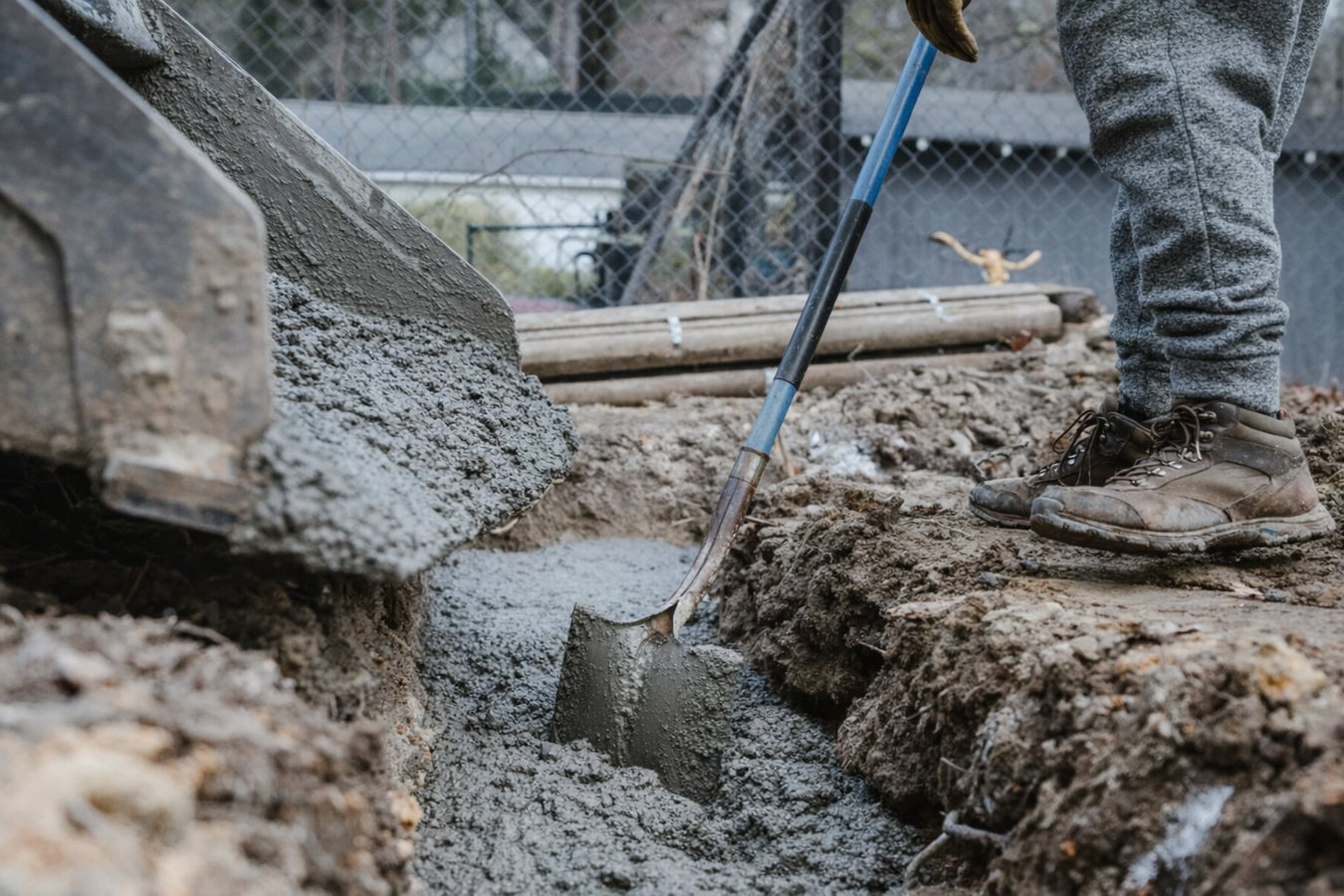
We handle the complete footing process: permit application with Fairfax County Land Development Services, underground utility marking coordination through Virginia 811, excavation to frost depth, tube or wood forming, rebar placement, and the pour itself. A county inspector checks the footing dimensions before any concrete goes in - that inspection step is required, and we schedule it as part of the project, not as an afterthought. For decks and porches, we size every footing based on the load it will carry and the local soil conditions, not just what the minimum code allows.
For larger projects that involve foundation work on a new structure or an addition connecting to the home's main foundation, we also offer foundation installation to cover the full scope under a single permit process. When raising or leveling an existing structure is needed before new footings can be poured, our foundation raising service addresses that step first. Every estimate starts with a free site visit - footing costs vary based on how many are needed, how deep the dig must go, and what the soil conditions look like on your specific property.
Best for homeowners building or replacing a deck, porch, or pergola where post footings must meet Fairfax County frost-depth and load requirements.
Best for homeowners adding living space to an existing home where the new structure must be supported by footings that connect properly to the existing foundation.
Best for detached garages, sheds, or outbuildings that require a permitted footing system to comply with Fairfax County structural requirements.
Best for homeowners with older decks or structures built to outdated standards who need an evaluation of existing footings before expanding or refinishing.
West Springfield developed heavily between the 1960s and 1980s, which means a large portion of the homes in this area are now 40 to 60 years old. Many decks and porches added during that era were built to standards that have since been updated - and in some cases, without permits at all. If you are adding onto an existing structure or replacing an old deck, a contractor needs to assess whether the original footings were built to current depth and load requirements or whether they need to be replaced before new framing goes up. Catching this before framing starts is always less expensive than discovering it mid-project.
The frost line depth of roughly 24 inches is the single most important local specification for footing work, and it applies across the entire Northern Virginia region. Contractors who do not work regularly in this area sometimes dig to shallower depths that are acceptable in warmer climates - and the result is footings that heave and shift within a few seasons. We apply the same frost-depth and clay-soil standards across every project we take in this area, including work for homeowners in Fairfax, VA and Burke, VA, where the soil and climate conditions are identical. The Virginia Department of Housing and Community Development publishes the building code requirements that govern footing depth and construction standards in this state.
Footing work is too site-specific to quote accurately over the phone. We visit your property, look at what you are building and where, and check the ground conditions. The visit takes 30 to 60 minutes, and you can expect a written estimate within one business day.
We apply for the required Fairfax County building permit and arrange for underground utility lines to be marked through Virginia 811 before any digging starts. You will see colored flags in your yard - this is required by law and protects your property. Permit processing typically takes a few days to a few weeks.
The crew digs holes or trenches to frost depth - about 24 inches in West Springfield - and sets tube or wood forms. Before any concrete is poured, a Fairfax County inspector visits to verify depth and dimensions. This is a required step and the only time anyone can confirm the work was done correctly.
Once the inspector approves, concrete is poured and smoothed. We then wait at least seven days before framing or placing any load on the footings - rushing this step is one of the most common causes of early cracking. Full strength develops over about 28 days, but most projects can proceed well before that.
Free on-site estimate. We handle the Fairfax County permit and inspection - no calls to the county office on your end.
(571) 559-8187The frost line in West Springfield sits around 24 inches below the surface. A footing that does not reach that depth will move when the ground freezes each winter, and the structure above it will show the damage within a few seasons. We dig to the correct depth on every project - not close enough, not the minimum, but right.
Unpermitted footing work is one of the most common problems that surfaces when West Springfield homeowners sell their homes. We apply for the permit, communicate with Fairfax County Land Development Services, and schedule the inspection before the pour - so your project is documented and legal from the start. You should never have to make a single call to the county unless you want to.
Clay soil in Fairfax County expands with moisture and shrinks in dry weather - that pressure affects footing performance over the long term. We size footings for the actual soil conditions on your property, not a standard spec that was written for a different region. The American Concrete Institute sets the standards we use to determine appropriate footing dimensions for varying load and soil conditions.
Before any excavation on your property, we coordinate underground utility marking through Virginia 811. This is required by state law, but not every contractor handles it proactively - skipping this step puts gas lines, water lines, and electrical service at risk. We treat this as a standard first step on every footing project, not an afterthought.
Footings are invisible once the concrete cures and the structure is built on top - which is exactly why the permit inspection step and the depth requirement matter so much. The work cannot be verified after the fact. Homeowners who have dealt with a failed footing or an unpermitted deck know the cost of getting it wrong the first time.
If an existing structure has settled or shifted before new footings can be poured, foundation raising corrects the level before new work begins.
Learn MoreFor additions and new construction where the full foundation - not just individual footings - needs to be poured and permitted as a complete system.
Learn MoreFairfax County's permit queue moves slowly in spring - schedule your site visit now so your deck or addition stays on track for this season.